
The complete guide
Black Nitrile Gloves for Mould Removal: Why Thickness and Single Use Matter
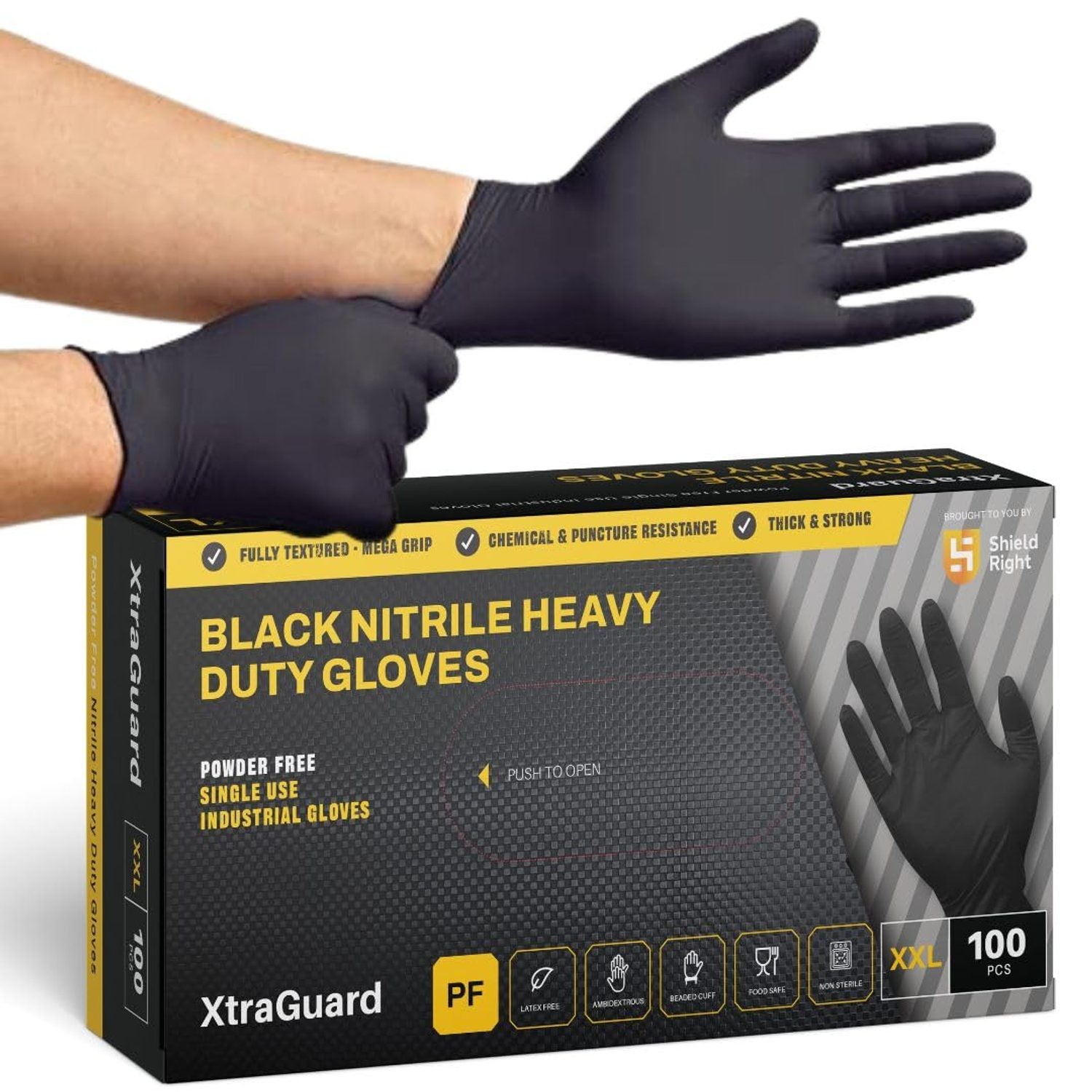
When you are cleaning mould, the gloves you reach for most often are disposable ones, because you want to bin them the moment the job is done. A single-use glove that you throw away takes the spores with it, which is exactly what you want when the whole point is to stop mould spreading. These black nitrile gloves are built heavier than the usual thin disposable, and this guide explains why that matters and how to use them well.
Why disposable gloves suit mould jobs
Mould spreads through spores that cling to whatever they touch, including your gloves. With a reusable glove you have to clean it carefully afterward or risk carrying spores to the next surface. With a disposable glove, you just take it off inside-out, bag it and bin it. The contamination leaves with the glove.
That is the case for keeping a box of disposable gloves on hand for mould work. They are quick to put on, quick to bin, and there is no cleaning step where spores can spread. A box of 100 gives you plenty for the job at hand and the next few after it.
Why thickness matters
Most disposable nitrile gloves are thin, and thin gloves tear. These are 6 mil thick, which is 2 to 3 times thicker than regular disposable nitrile. That extra thickness buys you two things: more puncture resistance, so they do not split when you grip a rough edge or a scrubbing brush, and a stronger chemical barrier between your skin and the products you are using.
For mould removal, that means a glove that survives the wet scrubbing and the cleaning chemicals without failing halfway through. A glove that rips mid-job is worse than no plan at all, because you do not always notice straight away.
What these gloves protect against
These gloves are built to keep a lot off your hands.
A barrier against chemicals
They give barrier protection against grease, gasoline and many petroleum-based chemicals, as well as the cleaning products you use on mould. That said, they are not a specialist industrial chemical glove, so for strong industrial chemicals you would want purpose-built gear. For a household mould clean-up with normal cleaning products, they are a strong choice.
Latex-free and powder-free
They are made from nitrile, not latex, so they suit people whose skin reacts to latex. One customer pointed out he is allergic to latex and had no trouble with these. They are also powder-free, so you do not get chalky residue on your hands or the surfaces you touch, which keeps the whole job cleaner.
Grip and everyday usefulness
The fingers are textured for slip resistance in wet and greasy conditions, so you keep hold of brushes, cloths and spray bottles when everything is slippery. They are touchscreen friendly, so you can check your phone without stripping them off, and they are food-safe, meeting HACCP standards along with ASTM D6319, EN 455 and AS/NZS 4011:2014. That mix of features means one box handles mould, cleaning, food prep, car detailing and general jobs around the house.
How to use them for mould removal
A disposable glove only protects you if you use it right.
Pick the right size
They come in Small, Medium, Large, XL and XXL. A glove that fits well gives you better dexterity and is less likely to tear at a stretched fingertip. Choose your size on the product page before adding to cart, and contact us if you are between sizes.
Suit up before you start
Put a fresh pair on before you disturb the mould, and pair them with a respirator, goggles and a coverall so you are covered before the first spore lifts. Gloves are the layer between your hands and everything you are about to touch.
Bin them the right way
When you finish a contaminated job, peel each glove off inside-out so the dirty surface ends up inside, bag them, and put them in the bin. Then wash your hands. Do not wash and reuse these gloves, they are single-use by design, and reusing them defeats the point of a disposable barrier.
How many gloves will one job use?
It is easy to underestimate how many gloves a mould job gets through. Gloves tear, get too dirty to keep wearing, or need changing when you move from a heavily contaminated area to a clean one. Changing gloves partway through is not wasteful, it is how you avoid carrying spores from the dirty work into the rest of the room.
A box of 100 gives you comfortable room for this. You can change gloves as often as the job needs without watching the count, and still have plenty left for the next few jobs around the house. If you find yourself getting through gloves quickly across regular work, a carton of 1000 brings the cost per glove down further.
Getting a good fit
Fit matters more than people expect with disposable gloves. Too big and they bunch at the fingertips, which snags and tears and costs you dexterity. Too small and they stretch thin and split at the seams. With sizes from Small through to XXL, most people can get a proper fit, and a glove that fits well gives you both better feel for what you are doing and a longer working life before it fails. If you are between sizes, add a note at checkout and we will help you choose.
The standards behind the box
Not every disposable glove is made to the same standard, and the certifications on this box tell you what you are getting. They are HACCP certified and made under AS ISO 9001:2008, and they conform to ASTM D6319, EN 455 and AS/NZS 4011:2014. Those are recognised standards for disposable examination and food-handling gloves, covering things like how the glove is made and how it performs.
For a mould job the practical upshot is a glove made to a known, tested standard rather than an unmarked cheap one. And because the same certifications make them food-safe, the box does double duty for food handling, cooking and cleaning, so it does not just sit in the cupboard waiting for the next mould job.
Disposable or reusable: keep both
Disposable nitrile gloves and reusable latex gloves each earn their place. Reach for these disposables when you want to bin the gloves after a contaminated job, or when latex bothers your skin. Reach for thick reusable latex gloves when the job is heavy, wet scrubbing you would rather rinse and repeat. Many people keep a box of these and a pair of reusables side by side, and pick whichever fits the task.
There is also comfort to think about over a long job. These gloves are breathable enough for extended wear, so your hands do not get as hot and clammy as they would in a thicker, non-breathable glove. That sounds like a small thing until you are an hour into scrubbing a shower recess, at which point a comfortable glove is one you keep on rather than peel off early.
Whichever you use, the gloves are one part of the job. A proper mould remover kills the mould at the source and helps stop it coming back, a respirator keeps spores out of your lungs, and fixing the moisture that caused the mould stops the whole problem returning. These gloves keep your hands clean and protected while you get it done, and at $29 for a box of 100 with free Australia-wide delivery, they are an easy one to keep stocked.