
The complete guide
Disposable Coveralls for Mould Removal: What to Wear and Why It Matters
Cleaning mould looks like a simple job until you understand what you are actually dealing with. Mould spreads through microscopic spores, and the moment you start scrubbing, wiping or spraying, those spores lift into the air and land on everything nearby, including your skin, your hair and your clothes. A good disposable coverall is the barrier that keeps them off you, and this guide explains why that matters and how to use one properly.
Why cover up for a mould job
When you disturb mould, you send spores everywhere. If they settle on your clothes, you can carry them from the bathroom into the bedroom, the laundry and the rest of the house, which is exactly how a small mould problem in one room turns into spots in three. Wearing a full-body suit that you throw away afterward breaks that chain.
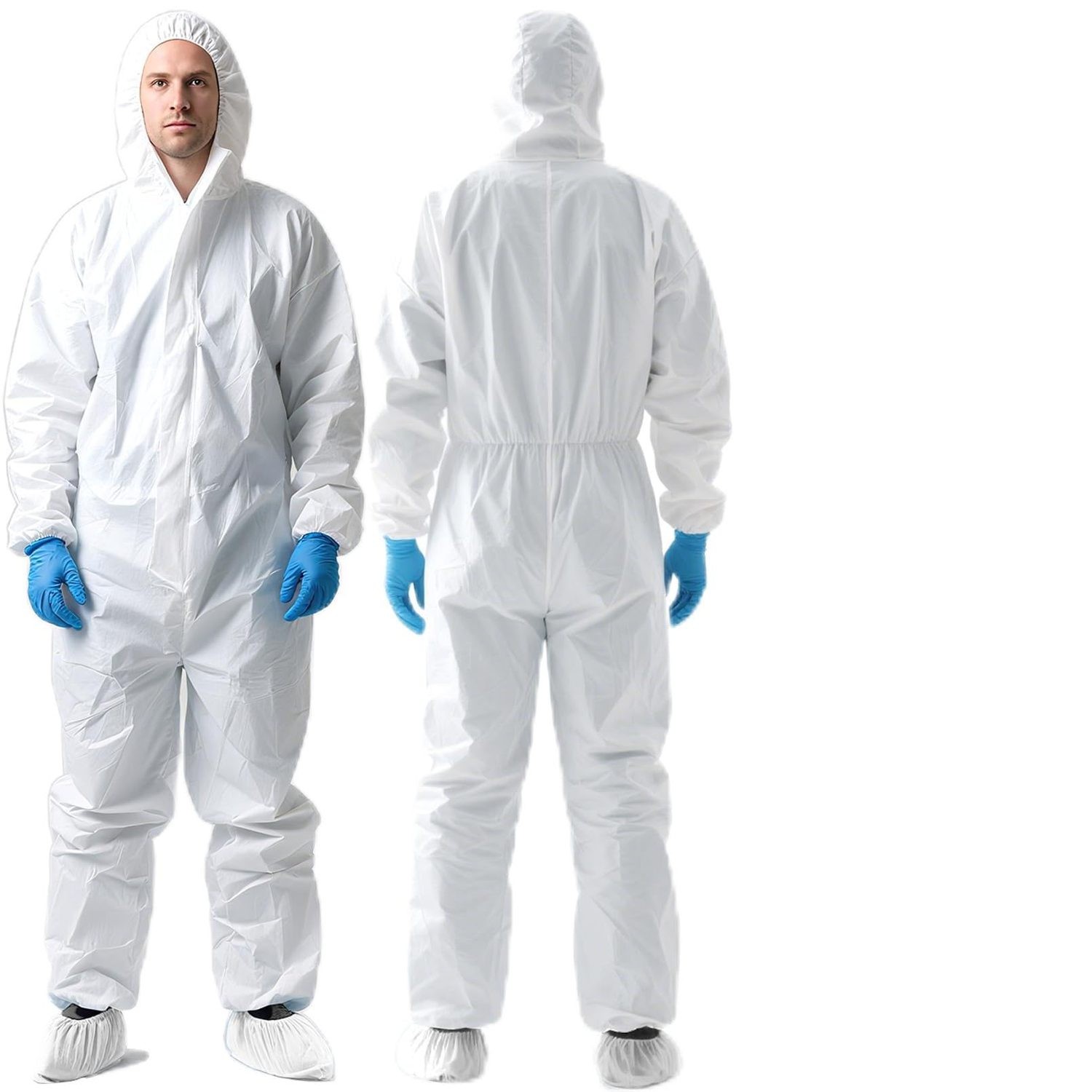
A protective coverall with a hood covers you from head to ankle. The hood keeps spores out of your hair, the body of the suit keeps them off your clothes, and the shoe covers stop you tracking mess across clean floors. When the job is done, the suit and everything on it goes in the bin.
This is why disposable suits beat washing your work clothes. Every wash cycle risks spreading spores through your machine and onto the next load. A suit you bin removes that risk entirely.
What these coveralls are made for
These are general-purpose protective coveralls. They are built for everyday mess, dust and splash protection during jobs like mould cleaning, painting, general maintenance, construction, woodworking, gardening and yard work. The non-woven fabric is breathable and tear-resistant, and it resists liquid splashes, so it stands up to cleaning sprays, paint and the odd knock without falling apart.
One thing to be clear about: they are not a hazmat or chemical suit. They protect you from mess, dust, spores and splashes, not from handling dangerous chemicals. For a normal household mould clean-up with standard cleaning products like a hydrogen-peroxide mould remover, that is exactly the level of protection you want. For anything involving strong industrial chemicals, you need purpose-built chemical gear instead.
What to look for in a disposable coverall
Not every cheap suit is worth buying. A few features make the difference between a suit that protects you and one that rips the first time you crouch down.
Breathable fabric
Cheap plastic suits trap heat and turn a ten-minute job into a sweaty ordeal, which tempts you to take the suit off early and skip the protection. A breathable non-woven fabric lets air move through, so you stay cooler and keep the suit on for the whole job. One customer put it plainly: the material is breathable enough to wear without feeling like a sauna.
A proper hood and elastic seals
Spores and dust find any gap. Look for a suit with an attached hood and elastic at the cuffs, waist and ankles. The elastic pulls the openings snug against you so dust and spores cannot creep up your sleeves or down your collar. These coveralls have all four, plus a double front zipper that makes them quick to get on and off.
The right size
A suit that is too small splits at the seams when you crouch, and one that is too big snags and drags through your work. These come in S to XXXL, so most people can get a proper fit. Pick your size on the product page, and the elastic cuffs, waist and ankles fine-tune the fit within each size.
Shoe covers included
Your shoes walk everywhere. A suit that comes with matching shoe covers, like this 5 pack does, keeps spores and splashes off your footwear so you do not carry the contamination out of the work area on your soles. Five suits, five pairs of shoe covers, one pair for each job.
How to use them during mould removal
Getting the most out of a disposable suit is about the order you do things in.
Suit up before you start
Put the coverall on before you open up the mouldy area, not after you have already stirred up spores. Zip it up, pull the hood on, fit your shoe covers, and add a respirator and goggles for the parts of your face the suit does not cover. Now you are sealed before the first spore lifts.
Work from clean to dirty
Set up so you can move from the cleanest part of the area toward the mouldiest, not the other way around. That keeps the worst of the contamination in one spot rather than spreading it around as you go.
Peel off carefully at the end
This is the step most people rush. When you finish, peel the suit off slowly and turn it inside-out as you go, so the contaminated outer surface ends up on the inside. Bag the suit, the shoe covers and any wipes, seal the bag, and put it in the bin. Then wash your hands. Doing this properly is what stops the spores you just collected from ending up back in the room.
One suit per contaminated job
Do not re-wear a suit you have worn for a mould job. The whole benefit of a disposable suit is that the spores leave with it. Start each contaminated job with a fresh suit from the pack.
How many suits will you need?
A 5 pack covers most household mould jobs with room to spare, but it helps to think about how you will use them. A single bathroom or one wall might take one suit. A bigger job across several rooms, spread over a weekend, might use two or three, because you want a fresh suit each time you go back in. If a helper is working with you, they need their own suit too.
Buying a 5 pack rather than a single suit means you never have to choose between protecting yourself and saving a suit. When protection is this affordable, there is no reason to re-wear one and risk carrying spores around.
When a coverall is worth it and when it is not
For a quick wipe of a small spot of surface mould, a suit might be more than you need, and gloves alone will do. The moment you are scrubbing, spraying, or opening up a larger patch that sends spores into the air, a suit earns its place. The rougher and dustier the job, the more you will be glad you covered up. Trust your nose and eyes. If you can see spores lifting or smell that musty, damp smell getting stronger as you work, you are stirring things up, and that is exactly when the suit matters.
Common mistakes to avoid
A few simple slip-ups undo the protection a coverall gives you, so they are worth knowing about.
The first is putting the suit on too late, after you have already disturbed the mould and filled the air with spores. Suit up first. The second is leaving gaps: an unzipped front, the hood pushed back, or sleeves rolled up all give spores a way in. Zip up fully and pull the elastic snug. The third is taking the suit off carelessly at the end, shaking spores back into the room. Peel it off slowly, inside-out, and bag it.
The last mistake is treating the suit as more than it is. These are general-purpose coveralls for mess, dust and splashes, not a chemical or hazmat suit. Use them for cleaning, mould and DIY, and reach for proper chemical gear if you are ever handling dangerous chemicals.
Pairing your coveralls with the rest of your kit
A coverall is one layer of protection, and it works best alongside the others. A half-face respirator keeps spores and cleaning fumes out of your lungs. Sealed goggles protect your eyes from splashes and airborne spores. Waterproof or disposable gloves keep your hands clean and dry while you scrub. Together with a suit, that is a full head-to-toe barrier for a mould clean-up.
The mould remover itself matters too. A professional-strength product kills mould at the source and helps stop it growing back, so you are not repeating the whole job in a month. The gear keeps you safe while the product does the work.
Getting good value
A 5 pack of hooded coveralls with shoe covers is straightforward value: five complete jobs' worth of protection, sent free across Australia. Because they are disposable, there is no washing, no cross-contamination and no guessing whether last time's suit is still clean. You suit up, do the job, and bin the evidence.
If you are tackling mould at home, treat the gear as part of the job rather than an afterthought. Cover up before you clean up, work clean to dirty, bin the suit when you are done, and fix the moisture that caused the mould in the first place. Do that and you protect both your health and the rest of your house while you get the problem sorted.