
The complete guide
Air Purifier Gel: How a Passive Gel Helps With Mould, Damp and Musty Smells
Some rooms just smell damp. A windowless ensuite, a bathroom that never quite dries out, a spare room that turns stuffy over winter. You can clean the surfaces and still walk in to that musty smell hanging in the air. An air purifier gel works on the part a surface cleaner cannot reach, the air itself, and it does it with no power, no noise and nothing to set up. This guide explains what it does, where to put it, and how to get the most from it.
What it is and what it does
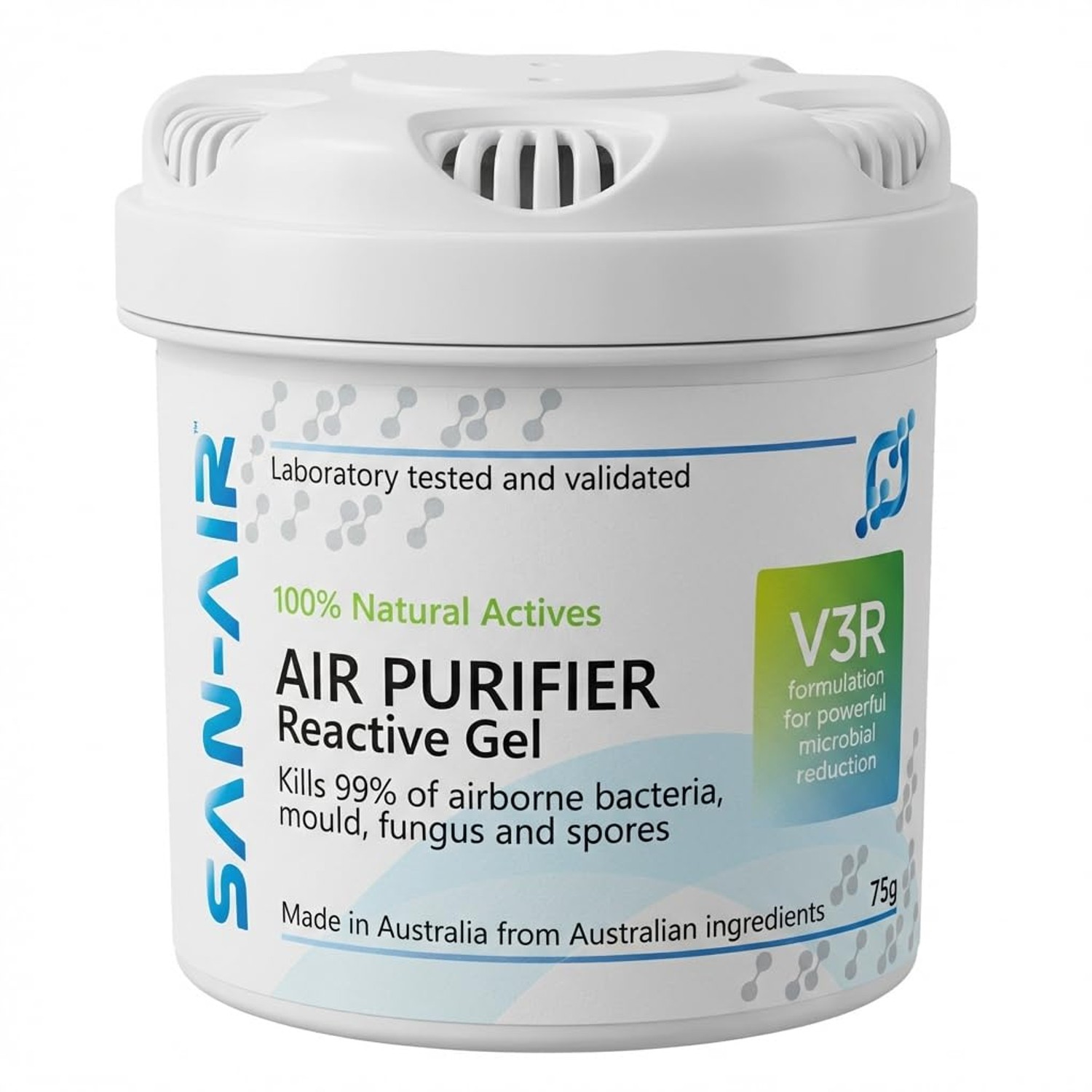
SAN-AIR Air Purifier Gel is a passive gel that works on the air in an enclosed space. You open the tub, set it in the room, and it goes to work in the background. It reduces airborne mould and bacteria, helps with mildew and dust mites, and cuts the musty odours that come from damp, pets and tobacco.
The word to focus on is passive. There is nothing to plug in, no filter to replace, and no motor to run. That is different from an electric air purifier, and it is worth being clear that if a product listing anywhere shows this as electronic or corded, that label is wrong. It is a gel in a tub. You take the lid off and place it.
That simplicity is the appeal. It is silent, it uses no electricity, and it needs no maintenance while it works. It suits the exact rooms where an appliance would be awkward: small bathrooms, ensuites and quiet bedrooms.
Why the air matters, not just the surfaces
When people deal with mould, they focus on the walls, tiles and silicone, and rightly so. But mould also lives in the air as spores, and damp rooms hold a stale, musty smell that a surface clean does not remove. You can scrub a bathroom spotless and still have air that smells damp.
That is the gap an air purifier gel fills. It treats the air in the room, working on airborne mould and bacteria and reducing the musty odour directly, rather than masking it with perfume the way a basic air freshener does. It is a companion to cleaning the surfaces, not a replacement for it.
It also helps in rooms where the problem is mostly smell and stuffiness rather than visible mould. A spare room that is shut up and damp, a wardrobe that smells musty, an ensuite with no window: these are places where freshening the air makes a real, noticeable difference.
Where to place it
Getting the placement right is most of the job.
Enclosed, damp rooms
The gel is made for enclosed, high-moisture spaces: bathrooms, ensuites, damp bedrooms and similar rooms. These are the spots where damp air sits and a musty smell builds up. One tub suits one enclosed room, so treat each problem room separately.
Where the air moves
The gel works by releasing into the air, so it needs the air to move to spread through the room. Placing it near a fan, an air conditioner vent, or a spot with some natural airflow helps it circulate rather than sitting in one corner. In a windowless bathroom, running the exhaust fan now and then helps it reach the whole space.
Out of reach
It is formulated to be safe around families and pets, but like any household product it belongs out of reach. Set it somewhere it will not be knocked over or picked up by a child or pet, such as a high shelf or the back of a vanity.
How to use it, step by step
There is very little to it, which is the point.
First, pick the room. Choose the enclosed, damp space where the musty smell or airborne mould bothers you most, and clean any visible surface mould first with a mould remover so the gel is not fighting a live surface problem.
Next, open the tub. Take the lid off and set the open tub in the room, ideally where a little air moves past it and out of reach of children and pets.
Then leave it. There is no switch and no schedule. The gel works gradually in the background, and over a few days you should notice the musty smell fading and the air feeling fresher.
Finally, replace it when it is spent. The gel slowly shrinks as it releases. When it has dried right down and you no longer notice it working, swap in a fresh tub. Keeping a spare on hand means the room never slips back.
What it will and will not do
It is worth setting honest expectations. This gel treats the air in a room. It reduces airborne mould and bacteria, helps with mildew and dust mites, and cuts musty odours from damp, pets and tobacco. In the enclosed, damp rooms it is made for, that adds up to noticeably fresher air.
What it does not do is remove mould from your walls, tiles or silicone. Those are surface jobs for a mould remover. It also does not remove the moisture that causes mould in the first place. For that you need better ventilation and to fix leaks or condensation. Think of the gel as one part of a bigger approach: clean the surfaces, control the damp, and use the gel to keep the air fresh.
Getting the best from it
A few small things make a difference.
Run the fan sometimes. Even in a windowless room, moving the air helps the gel spread and does the room good in its own right.
Use one per room. The 75g size is sized for a single enclosed space, so give each problem room its own tub rather than expecting one to cover the house.
Pair it with the real fixes. The gel is at its best when the moisture problem is also being handled. Wipe down condensation, keep humidity down, and treat any surface mould, and the gel keeps the air fresh on top of that.
The bottom line
For a damp, musty room, an air purifier gel is the quiet, simple option. No power, no noise, no setup: you open the tub, place it where a little air moves, and let it work on airborne mould, odours and dust mites in the background. Clean your surfaces, control the damp, and let the gel handle the air, and that stale, musty room finally smells fresh again.