
The complete guide
Choosing a Respirator for Mould Removal: Fit, Filters and Safe Use
Of all the gear you wear for a mould job, the respirator is the one that protects the part you cannot afford to gamble with: your lungs. When you scrub, wipe or spray mould, you lift thousands of spores into the air, and cleaning products add fumes on top. A half face respirator keeps both out of your airways, and this guide covers how to pick one, fit it and use it safely.
Why a respirator matters for mould work
Mould spreads through spores so small you cannot see them. Disturb a patch of mould and those spores go airborne, right at head height where you are breathing. Breathing them in is the part of a mould clean-up that does the most harm over time, especially in a small, closed room like a bathroom.
Add to that the fumes from the products you are using. Even a low-fume, bleach-free mould remover gives off some vapour when you spray it in an enclosed space. A reusable respirator mask with a proper filter handles both the spores and the vapour, so you can work without breathing the mess you are cleaning up.
Your eyes need protecting too. Spores and splashes land in eyes just as easily as they reach your nose and mouth, which is why this kit pairs the respirator with a set of sealed, anti-fog goggles.
What this kit gives you
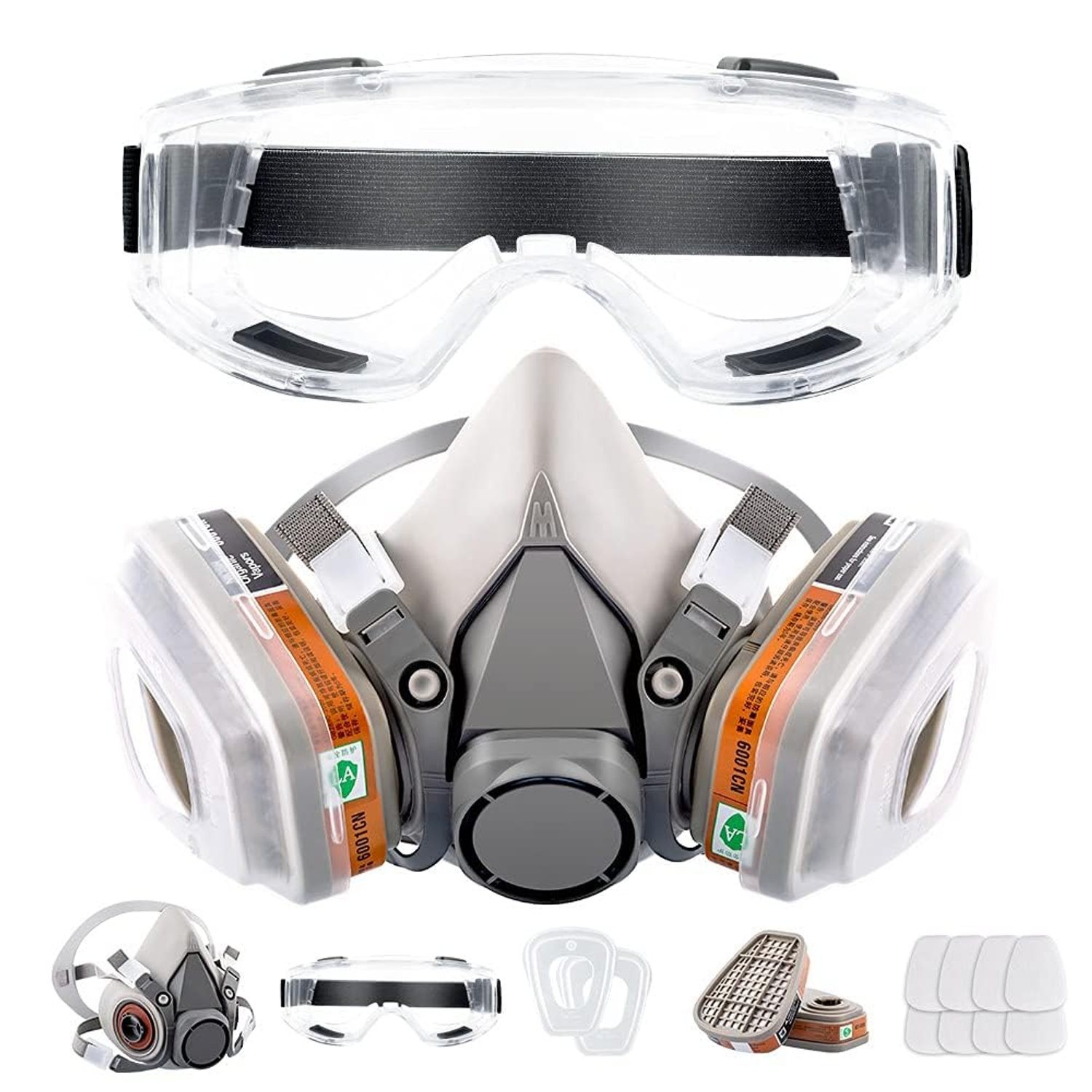
This is a complete face and eye protection set rather than a bare mask. Inside the box you get the half-face respirator, a pair of anti-fog safety goggles, two filter boxes, eight filter cottons and two plastic covers. That means you are ready to work straight away and have spare filters for several jobs.
A soft, sealing silicone edge
The part that touches your face is made from food-grade elastic silicone. It is soft, it flexes to your face shape, and it seals so dust and particles cannot sneak in around the edges. A seal is the whole point of a respirator. If air leaks in around a hard, ill-fitting edge, the filter is not doing its job. The soft silicone here is built to sit comfortably and stay sealed.
Double filtration that you can breathe through
The double filtration system blocks 90% of organic vapour and gas, smoke, pollen, dust and other airborne particles. A breathing valve lets you exhale easily so the mask does not feel stuffy or make you feel like you are suffocating. One customer used it while cutting wood with a saw and painting, and found it stopped both the particles in the air and the aerosols from paint reaching his nose and mouth.
Anti-fog goggles
The goggles seal around your eyes and are anti-fog and splash-resistant, so they stay clearer than basic safety glasses when you are working up close and warm. They keep splashes from cleaning sprays and airborne spores out of your eyes.
An honest word on ratings
It is important to be straight about what this is. This is a reusable half-face respirator for DIY, cleaning and painting. It is not a certified P2 or N95 medical respirator. For a household mould clean-up, garage work, sanding, painting and general dusty jobs, it does a solid job of keeping spores and fumes out. If your situation calls for certified medical-grade respiratory protection, you need a product carrying that certification instead. Use the right filters, fit the mask snugly, and follow the directions that come with it.
How to fit and use it properly
A respirator only works if it seals and you use it in the right order.
Get the seal right
Put the mask on before you disturb the mould, not after. Pull the adjustable strap snug so the silicone edge sits flat against your face with no gaps. Cover your mouth and nose fully. If you feel air leaking in around the edges when you breathe in, tighten the strap or reposition the mask until it seals.
Wear it for the whole job
Keep the respirator on from the moment you start stirring up spores until you have finished and cleared the area. Taking it off halfway through to get some air defeats the purpose, because the air in the room is exactly what you are trying to filter out. Ventilate the room instead by opening a window, and keep the mask on.
Add the goggles and the rest of your gear
Fit the goggles so they seal around your eyes, and pair the respirator with gloves and a disposable coverall for full head-to-toe protection. Face, eyes, lungs, hands and clothes all covered means the mould has nowhere to land on you.
Looking after it so it lasts
Because this respirator is reusable, a little care keeps it working.
Swap filters, do not wash them
The filter cotton is the part that catches everything, so replace it when it looks dirty, when breathing gets harder, or when smells start getting through. The kit comes with eight spare cottons, so you are covered for several jobs. Do not try to wash the filter cotton, just fit a fresh one.
Clean the mask itself
Wash the silicone mask with warm water around 30C and a little mild dish soap to remove any smell, then let it dry fully before you store it. Keep the plastic covers on the filter housings between jobs to stop dust settling on them.
When to change the filter
The filter cotton is the part doing the actual work, so knowing when to swap it keeps you properly protected. There are three simple signs. The first is when breathing starts to feel harder than it did at the start, which means the filter is clogging with what it has caught. The second is when you start to notice smells or a taste getting through, which tells you the filter is no longer stopping everything. The third is when the cotton looks dirty or discoloured.
Do not wait for all three. If any one of them shows up, fit a fresh cotton from the kit. With eight spare cottons included, you have enough to run through several jobs before you need more, and there is no reason to push a tired filter past its useful life.
Storing it between jobs
How you store the respirator between jobs affects how long it lasts and how well it works. Keep the two plastic covers on the filter housings so dust does not settle on the cotton while the mask sits on the shelf. Store the mask somewhere dry and out of direct sun, because heat and sunlight age silicone over time. A clean, dry, covered respirator is ready to seal properly the next time you need it, rather than needing a wash and a check first.
A quick word on the goggles
It is easy to focus on the mask and forget the goggles, but your eyes need protecting on a mould job just as much as your lungs. Spores and splashes reach your eyes easily, and rubbing an itchy, irritated eye with a contaminated glove only makes things worse.
The goggles in this kit seal around your eyes rather than sitting open at the sides like normal glasses, so airborne spores and splashes from cleaning sprays cannot get in around the edges. Being anti-fog, they stay clearer than basic safety glasses when you are working close and warm, which matters because a fogged-up lens tempts you to lift them off. Fit them snug, and wear them for the whole job alongside the respirator.
Putting it all together
A respirator is the piece of mould-removal gear that protects your health most directly, so it is worth fitting and using well. Seal it against your face, keep it on for the whole job, pair it with goggles, gloves and a suit, and swap the filter when it is spent.
Do the job in a well-ventilated space, use a proper mould remover that kills the mould at the source, and fix the moisture that let the mould grow. The respirator keeps you safe while you do the work, and with eight spare filters in the box and free Australia-wide delivery, it is a straightforward piece of kit to keep on the shelf for the next job.