
The complete guide
Reusable vs Disposable Gloves for Mould Removal: Which to Pick
Your hands do all the work in a mould clean-up, which makes them the part most exposed to both the mould and the cleaning products you are using. A pair of thick, chemical-resistant gloves keeps your skin out of contact with both, and because these are reusable, you rinse them and use them again rather than binning them after every job. This guide covers when to reach for reusable gloves, how they compare with disposables, and how to get the most out of them.
Why glove up for mould work
Mould removal is wet, messy work. You are scrubbing surfaces, wringing out cloths, and spraying or wiping cleaning products across walls, tiles and grout. Bare hands pick up mould, get dried out by the cleaning chemicals, and stay damp for the whole job.
A waterproof, chemical-resistant glove puts a barrier between your skin and all of that. The mould stays on the surface you are cleaning, the product stays off your skin, and your hands stay dry. For a job that can take an hour or more, that comfort and protection make a real difference.
What these gloves are made for
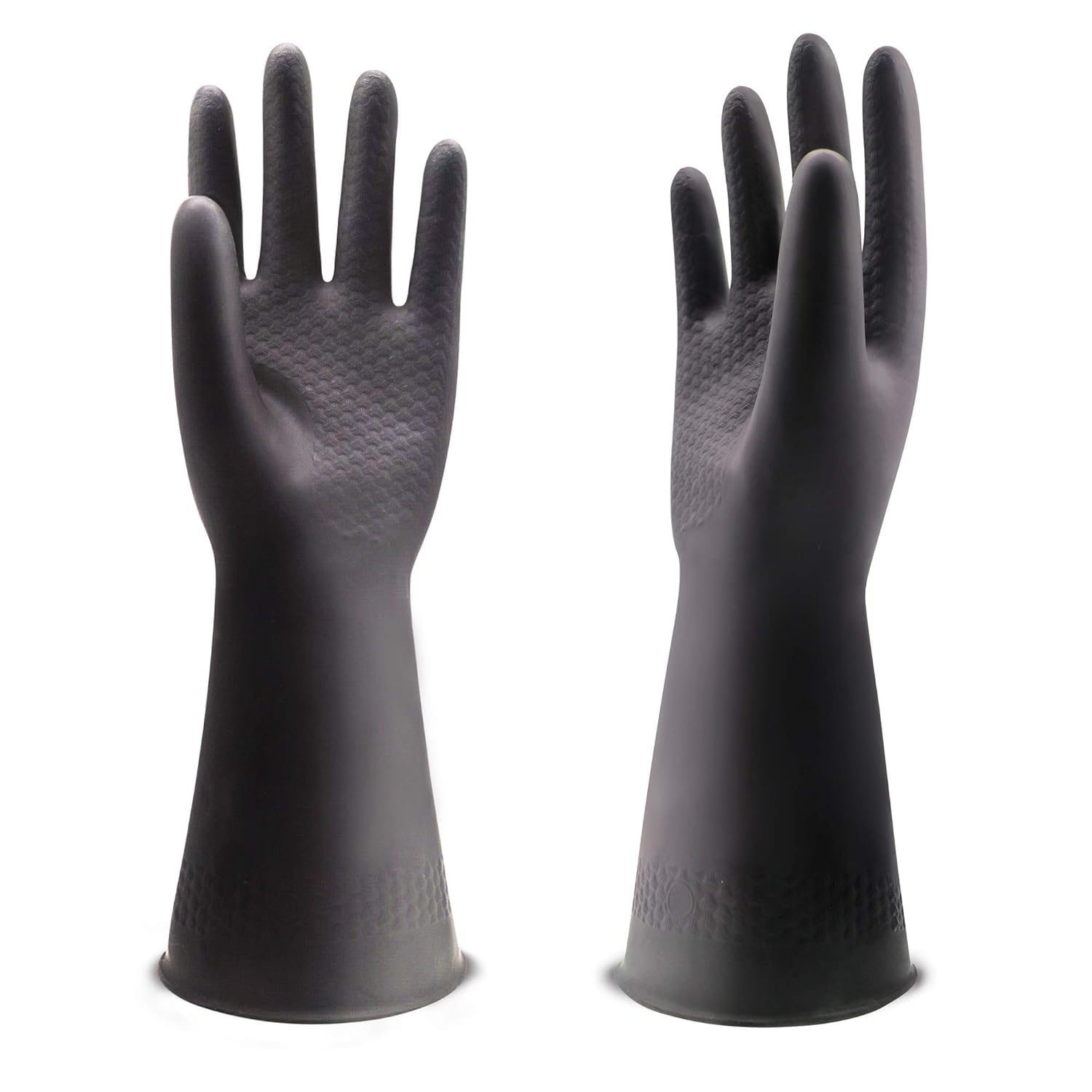
These are heavy-duty gloves made from natural latex. The latex has plenty of stretch, so they pull on and off easily and move with your hands instead of fighting you. The material resists chemicals and stands up to wear, which is why the same gloves suit cleaning, chemical handling, automotive work, furniture renovation, car washing, dishwashing and yard work as well as mould removal.
The palm has a textured, non-stick surface, so you keep a firm grip on brushes, cloths and spray bottles even when everything is wet and slippery. A rounded cuff edge gives you something to grab when you peel them off, so removal is quick and clean.
Reusable versus disposable: which to pick
There is no single right answer here. Reusable and disposable gloves each have their place, and many people keep both.
When reusable gloves win
Reach for these thick reusable gloves when the job is wet, involves a lot of scrubbing, or uses cleaning chemicals. They are tougher than a thin disposable glove, they do not tear as easily under pressure, and being waterproof they keep your hands dry through long jobs. One customer summed them up as thick, waterproof, leak-free and perfect for heavy cleaning jobs. After the job you rinse them, dry them and put them away for next time.
When disposable gloves win
For a quick job, or when you specifically want to bin the gloves afterward so you do not spread mould spores, thin disposable gloves make more sense. They are also the answer if you have a latex allergy, since these reusable gloves are made from natural latex. Our black nitrile gloves are latex-free and single-use, which covers both of those cases.
Many people use disposables for the lighter, spore-heavy parts of a job they want to bin afterward, and switch to thick reusable gloves for the heavy wet scrubbing. There is no wrong way to combine them.
Getting the most out of them
A few habits keep these gloves protecting your hands and lasting a long time.
Pick the right size
They come in Medium and Large. A glove that fits well grips better and is less likely to slip off or tear at a stretched seam. If you are between sizes or not sure, add a note at checkout or contact us and we will help you choose.
Mind the abrasive jobs
These gloves are strong for chemical, cleaning and wet work. What wears any glove down faster is heavy abrasive scrubbing, like going at a surface with steel wool. That is not a fault, it is just how abrasion works on rubber. For rough jobs, spot-test first, check for thinning or wear, and do not expect a single pair to survive endless steel-wool sessions.
Rinse, dry and store
After a job, rinse the gloves to get the cleaning product off, then let them air dry before you store them. Left wet and screwed up in a corner, any rubber glove degrades faster. A quick rinse and a proper dry is all they need to be ready for next time.
What chemical resistant really means
It is worth being clear about what a chemical-resistant glove does and does not do, because the phrase gets used loosely. These gloves resist the kinds of chemicals you meet in everyday cleaning, dishwashing, automotive work and mould removal. The natural latex acts as a barrier so those products do not soak through onto your skin during normal use.
That is different from a specialist industrial glove rated for handling strong, concentrated chemicals for long periods. For a household mould clean-up with a standard cleaning product, these gloves are the right tool. They keep the product and the mould off your skin while you work. If you are ever handling harsh industrial chemicals, check that specific chemical against a glove made and rated for it. Matching the glove to the job is always the safe approach.
Watch for the signs of wear
Any reusable glove has a lifespan, and latex is no exception. Keep an eye out for thinning spots, small splits at the fingertips or cuff, and any stickiness or stiffness in the rubber, which are all signs the glove is near the end of its life. A glove that has started to fail lets water and product through without you noticing, so it is better to replace a worn pair than to push it one job too far. Because these are inexpensive and reusable, replacing them when they are spent still costs far less than buying disposables for every job.
Fit them into the rest of your kit
Gloves are one layer of a mould clean-up. Pair them with a half-face respirator so you are not breathing spores, sealed goggles to protect your eyes, and a disposable coverall to keep spores off your clothes. Hands, lungs, eyes and body all covered means the mould has nowhere to reach you.
The product you clean with matters too. A professional-strength mould remover kills mould at the source and helps stop it growing back, so you clean once rather than every few weeks. These gloves keep the product and the mould off your skin while it does its work.
Grip you can rely on
One thing that separates a good cleaning glove from a frustrating one is grip. A mould job has you holding wet brushes, dripping cloths and slippery spray bottles, and a glove that cannot hold onto them turns the job into a fight. The textured, non-stick palm on these gloves is built for exactly that. It bites into wet and slippery surfaces so tools stay put in your hand, which is safer as well as easier, because a dropped brush or bottle in a wet bathroom is how small accidents happen.
The stretch in the latex plays a part too. Because the glove flexes with your hand rather than fighting it, you keep enough feel to work carefully in tight spots like grout lines, corners and the edges of a shower recess where mould likes to hide. Good grip and good feel together mean you can do a thorough job rather than a rushed one.
Simple, honest value
At $29 with free Australia-wide delivery, a pair of reusable chemical-resistant gloves is one of the cheapest bits of protection you can buy, and because you reuse them, the cost per job keeps dropping. Keep a pair under the sink for mould jobs, dishwashing, car washing and everything in between. Rinse them, dry them, and they are ready whenever the next job turns up.