
The complete guide
Mould Stain Remover Gel: How to Clear Black Grout and Silicone Without Scrubbing
Some mould stains laugh at a spray bottle. The black staining set deep into shower silicone, the mould line along the grout, the ring inside a washing machine seal: you spray, it runs off, and the stain stays. A mould stain remover gel solves that by being thick enough to cling and stay in contact with the stain for hours. This guide covers how it works, where to use it, and how to use it safely, because it is a bleach-based product.
Why a gel, not a spray
The problem with a spray on set-in stains is contact time. To lift a deep stain, the product has to stay on it. A watery spray runs straight off vertical grout and silicone, so it barely touches the stain before it is on the floor. You end up spraying again and again and getting nowhere.
A gel is different. It is thick and it clings, so when you run a line along a grout join or a silicone bead, it stays there. That lets it work on the stain over several hours instead of seconds. For deep, set-in black staining on grout mould and shower silicone mould, that contact time is the whole game.
It also means no scrubbing. You are not attacking the stain with a brush and elbow grease. You apply the gel, walk away, come back hours later, and wipe or squeegee it off. The gel did the work while you did something else.
An honest word: this is a bleach product
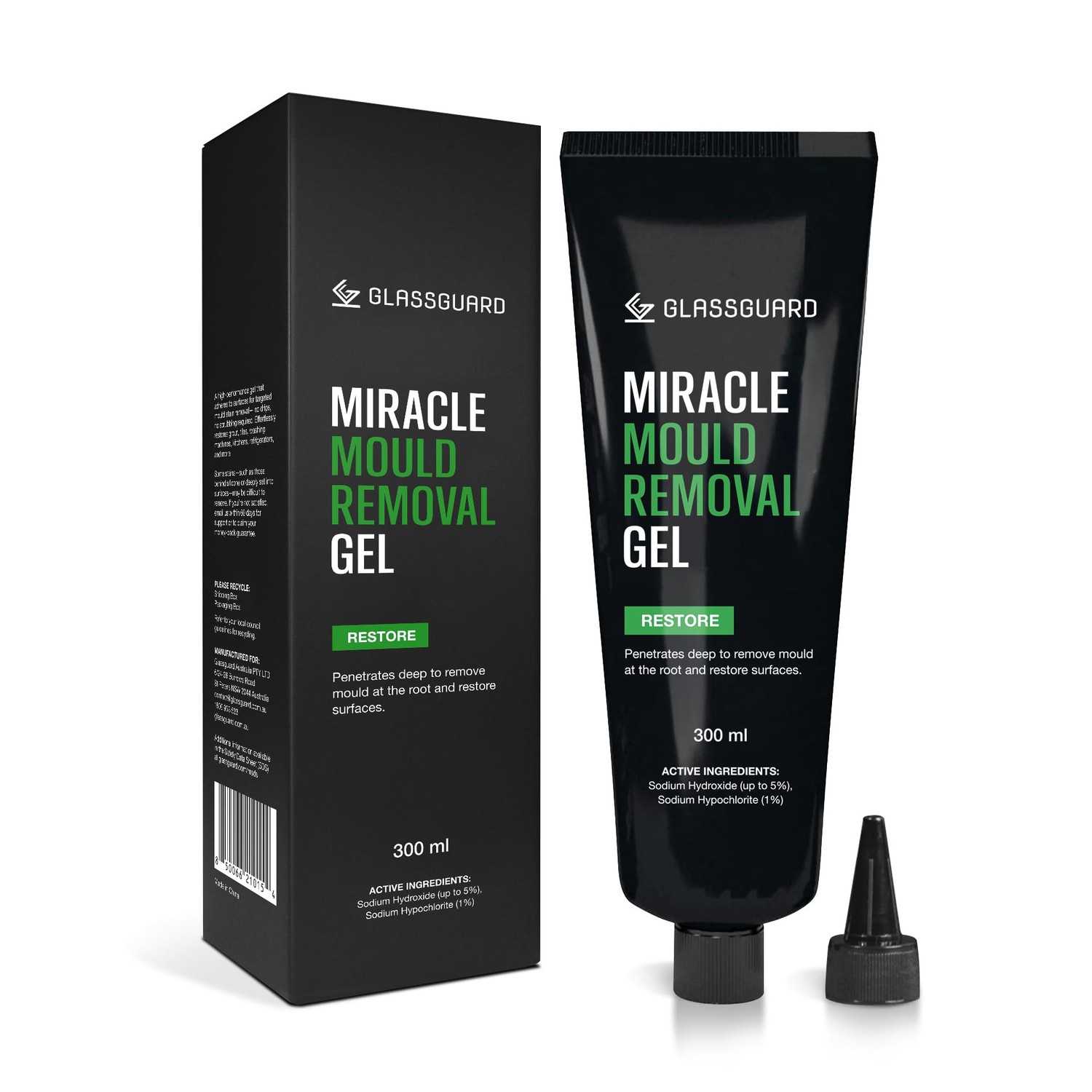
It is important to be straight about this. GlassGuard Miracle Mould Stain Remover Gel is bleach-based. That is why it is so effective on deep stains, and it is also why it has a bleach smell.
That means you need to treat it with respect. Use it in a ventilated space, open a window or run the exhaust fan, and wear gloves and eye protection. Never mix it with other cleaning products, because bleach mixed with certain cleaners can create dangerous fumes. Keep children and pets out of the room while it is working, and rinse the surface well afterward.
None of that is a reason to avoid it. It is a reason to use it properly. Handled with a little care, it clears stains that bleach-free sprays simply cannot touch.
Where it works best
This gel is aimed at hard, non-porous and sealed surfaces where staining sets in.
Grout lines
Grout goes black in showers and around basins because it holds moisture. As a grout mould remover, the gel is run in a thin line along the join, left to work, then wiped and rinsed. It clings to the grout instead of running down the tile.
Shower silicone and caulk
The silicone bead around a shower base, bath or basin is a classic mould trap, and it is exactly where a spray fails. As a shower silicone mould remover, the gel sits on the bead and lifts the black staining over a few hours. Deep, old staining may need a second coat.
Washing machine seals
Front-loader washing machines grow mould on the rubber door seal, where water and detergent collect. The gel is made for this. Apply it to the seal, leave it, then wipe, rinse thoroughly, and run an empty rinse cycle before your next wash.
Ceramic and glass
On ceramic tiles and glass, the gel lifts stains and residue and rinses away clean. It is a good all-rounder for the hard surfaces of a bathroom, as long as you keep it away from surfaces it is not suited to.
How to use it, step by step
The method is simple, and patience does most of the work.
First, give the area a quick clean and let it dry, so the gel sits on the stain rather than on loose grime. You do not need to scrub the mould first, the gel handles that.
Next, put on gloves and eye protection, open a window or run the fan, and apply the gel. Run a thin line along grout and silicone, or spread a thin layer on a flat stained area. Because it is thick, it stays put, so you only need it where the staining is.
Then leave it. Give it several hours to lift the stain. Do not let it dry out completely. For very stubborn, long-standing staining, leave it longer or apply a second coat.
Finally, wipe or squeegee the gel off, then rinse the surface well with water. Stand back and check the result. Most staining lifts on the first go, and the worst corners may need a repeat.
When one application is not enough
Set-in stains that have been there for years do not always clear in a single pass, and that is normal. If a grout line or silicone corner is still marked after the first application, simply repeat. Two or three applications on the most stubborn spots is expected for deep staining, not a sign the product is not working.
There is also a limit worth knowing. When mould has grown deep inside old, perished silicone, the black is inside the silicone itself, not just on the surface. No stain remover can fully clear that. The real fix there is to cut out the old silicone and reseal, which gives you a clean bead and a fresh start.
Keeping the stains from coming back
A stain remover clears what is already there, but it does not control moisture, and moisture is what feeds mould. Once you have cleared the grout and silicone, keep them clear by drying the area after use. Squeegee the shower walls and base, wipe down the silicone, leave the washing machine door ajar between washes, and ventilate the bathroom well.
A quick weekly wipe of the grout and seals stops fresh mould from setting in, which means you reach for the heavy-duty gel far less often. Treat the deep stains with the gel, then keep on top of the surface with good habits, and your bathroom stays clean with a lot less effort.
The bottom line
When a spray runs off and the stain stays, a clinging gel is the answer. GlassGuard Miracle Mould Stain Remover Gel is thick, no-scrub, and made for the deep black staining on grout, silicone, seals and glass. It is bleach-based, so use gloves and ventilation and rinse well. Apply it, leave it, wipe it off, repeat on the worst corners, and then keep the area dry so the stains do not come back.